Choosing the Right Beauty Display Solutions
Retail space is one of the most valuable resources in a cosmetics store, and using it effectively requires careful planning. A crowded display can make products difficult to locate, while an oversized fixture may reduce available shopping space. This is why modern retailers need to consider product dimensions, customer movement, storage requirements, and merchandising priorities before selecting display equipment. A professionally planned beauty retail display should make efficient use of available space without compromising product visibility or accessibility. The right combination of display sizes, shelf arrangements, and materials can help retailers create an organized store layout that supports both customer convenience and daily operations.
One of the first considerations in display planning is the variety of products within each cosmetics category. Face makeup collections may include compact powders, liquid foundations, concealers, and blush products with very different packaging dimensions. A suitable face makeup display stand should provide enough compartment space for each product type while maintaining a logical arrangement. Retailers should measure their merchandise before finalizing the fixture design. This simple step can prevent problems such as overcrowded shelves, unused compartments, and difficulty accessing products during restocking.
Eye makeup products often require a combination of vertical and horizontal storage arrangements. An effective eyeshadow display stand can use tiered platforms to improve visibility in limited counter space, while a compact eyeliner display can accommodate slender products in organized holders. When planning these fixtures, retailers should consider how customers approach the display and whether the products can be removed and replaced easily. The best design is not necessarily the largest one; it is the structure that provides sufficient capacity while preserving a comfortable browsing experience.
Lipstick collections can take up considerable counter space when different colours and product lines are not properly organized. A well-planned lipstick display stand can maximize storage capacity through carefully spaced slots, tiered sections, and compact product arrangements. Retailers should also consider whether the display needs to accommodate testers, promotional items, or additional stock. Choosing the correct fixture dimensions from the beginning helps avoid unnecessary changes after installation. A space-efficient design also makes it easier for employees to clean the counter and replenish products during busy periods.
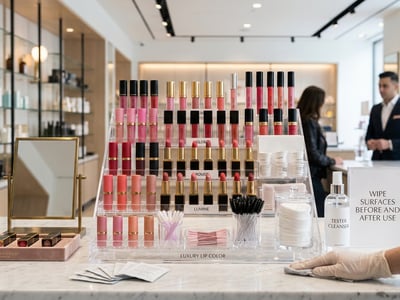
Smaller accessories require their own space management strategy. A dedicated sponge display can keep different beauty sponges separated and prevent them from becoming mixed together. For stores carrying a broader accessory collection, a versatile makeup tools display stand can combine brush holders, compartments, and individual product sections within one fixture. Retailers should pay particular attention to cleaning access and the stability of smaller holders. These details are important because accessories are frequently handled by customers and may need regular rearrangement throughout the day.
Supermarkets present additional space planning challenges because cosmetics displays must fit within existing aisle structures and shared retail areas. A customized displaysupermarket cosmetics display should be designed around the store's available dimensions, customer traffic patterns, and product assortment. Compact countertop fixtures may be suitable for smaller promotional areas, while larger freestanding structures can accommodate broader collections. Retailers should also consider replenishment access, visibility from different directions, and the possibility of future product range changes. These factors help ensure that the display remains useful after the initial installation.
Seasonal products require flexible space allocation because their merchandising priorities can change throughout the year. A practical sunscreen display can be positioned in a high-visibility area during warmer seasons and adjusted when promotional requirements change. Fragrance products, meanwhile, may need more carefully arranged fixtures that support premium presentation. A well-designed perfume display stand can combine compact shelving with dedicated product spaces, allowing retailers to showcase different bottle sizes without making the counter look crowded. Both examples highlight the importance of matching fixture dimensions to the characteristics of the merchandise.
For retailers managing several branches, space planning becomes more complicated because each store may have different architectural conditions. A flexible retail chain display system offers a practical way to maintain consistent merchandising standards while adapting individual components to different locations. Modular fixtures can also support future adjustments when brands introduce new products or update their store layouts. Before choosing a supplier, retailers should discuss measurements, material specifications, assembly requirements, transportation, and installation arrangements. A detailed planning process can prevent costly mistakes and improve the long-term usefulness of the fixtures. Ultimately, smart beauty retail space planning is about achieving the right balance between product capacity, customer comfort, and visual presentation.


Comments
Post a Comment