From Concept to Store Shelf: How to Avoid Common Mistakes When Ordering Custom Beauty Displays
Ordering custom retail displays can be more complicated than many beauty brands expect. A design that looks attractive on a computer screen may not fit the actual store environment, accommodate the product packaging, or withstand everyday customer interaction. These problems often occur when businesses focus only on appearance instead of considering dimensions, materials, functionality, and production requirements. Working with an experienced custom display manufacturer gives businesses an opportunity to address these details before manufacturing begins. Clear specifications, realistic expectations, and effective communication are essential for turning an initial concept into a practical retail fixture.
One of the biggest mistakes in custom display purchasing is starting production without a clear design plan. Retailers sometimes provide only a reference image or a general description, leaving important details open to interpretation. A professional 3D display render can help solve this issue by showing the proposed structure, proportions, compartments, and visual elements before manufacturing. It allows buyers to review the concept, identify possible problems, and request adjustments at an early stage. This reduces the likelihood of expensive revisions after production has already started.
Material selection is another area where businesses can make costly mistakes. Acrylic thickness, surface finishing, structural support, and component connections all influence how a finished display performs. A lightweight fixture may be suitable for small countertop products but inappropriate for heavier merchandise or large freestanding structures. Retailers should explain the intended products, display location, and expected usage conditions before confirming the specifications. A suitable custom beauty display manufacturing process should consider both the visual requirements and practical demands of the final retail environment.
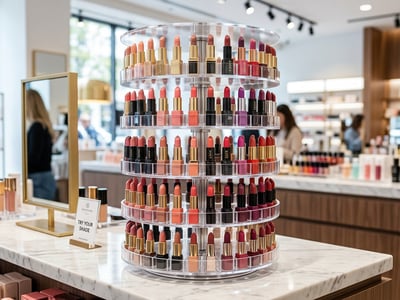
Brand consistency is equally important, especially when displays are intended for promotional campaigns or premium product collections. A fixture with the wrong colour, poorly positioned logo, or inconsistent branding can make the entire presentation look unprofessional. A customized Pantone color display helps brands maintain more accurate colour coordination across their retail fixtures. Logo placement, printing methods, surface treatments, and material finishes should also be confirmed before production. These details help ensure that the final display supports the brand's existing visual identity rather than creating an unrelated appearance.
Retailers should also consider the limitations of their available space before selecting a fixture. A large display may provide plenty of product capacity but can become inconvenient in a small cosmetics store. On the other hand, an undersized fixture may not accommodate the complete product assortment. A suitable modular store fixture provides greater flexibility because its components can be configured according to different merchandising requirements. Modular arrangements are particularly useful for retailers planning future expansions or frequent product category updates.
Testing the display before mass production is another step that should not be overlooked. Even when the design looks correct, small details such as product spacing, shelf angles, and component connections may need adjustment. A structured display sampling stage allows businesses to evaluate a physical prototype before committing to a larger order. Retailers can check whether products fit properly, whether the fixture is easy to assemble, and whether the finished appearance matches the approved design. This is particularly valuable for brands introducing a new display concept across several stores.
Quality consistency becomes even more important when ordering large quantities. A display that performs well as a single sample may still require additional production controls to ensure that every unit meets the same specifications. A proper display inspection process can help identify issues involving dimensions, surface finishing, assembly, and packaging before products leave the factory. Buyers should also clarify inspection standards and acceptance requirements in advance. Establishing these expectations helps reduce misunderstandings and makes supplier relationships more dependable.
The final challenge is coordinating the delivery of finished displays with store opening dates, promotional campaigns, and installation schedules. Delayed shipments or insufficient packaging can disrupt an otherwise successful retail project. Businesses should discuss production lead times, packing methods, shipping arrangements, and delivery responsibilities before confirming an order. A professional retail display logistics arrangement helps connect manufacturing with the practical requirements of retail deployment. Ultimately, successful custom display purchasing depends on more than finding an attractive design. Careful planning, prototype evaluation, branding accuracy, quality checks, and delivery coordination all contribute to a smoother project from the initial concept to the finished store installation.


Comments
Post a Comment