What Beauty Brands Should Look for When Choosing a Custom Display Production Partner
Choosing a production partner is an important decision for beauty brands developing custom retail fixtures. The right supplier should understand product presentation, material selection, production requirements, and delivery expectations. A supplier that focuses only on appearance may overlook practical issues that affect the finished display. Businesses should look for an experienced beauty display manufacturer capable of supporting the project from concept development through final production.
The first consideration is whether the manufacturer can understand the brand's requirements and translate them into a workable design. A good fixture must reflect the brand identity while accommodating the actual products it will hold. Professional display design service support helps buyers evaluate layouts, dimensions, and visual details before production begins.
Material knowledge is another important factor. Different beauty displays may require acrylic, metal, wood, or combinations of materials depending on their intended use and appearance. An experienced cosmetic display manufacturer should be able to discuss suitable material options and explain how they affect durability, finish, and production requirements.
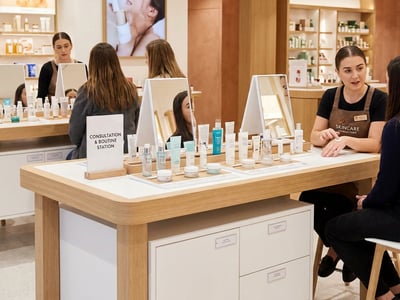
Brands should also evaluate whether the supplier can produce customized visual details accurately. Logo placement, surface finishes, and brand colors all influence the final presentation. A professional logo etching display solution can incorporate brand identification into the fixture while supporting a more distinctive appearance.
Production flexibility matters when a project involves different order quantities or several development stages. Some brands may need an initial sample before confirming a larger production order. A suitable OEM display manufacturer should be able to discuss customization requirements and production arrangements based on the project scope.
Quality management should also be part of the supplier evaluation process. Buyers need confidence that finished fixtures will match approved specifications and maintain consistent workmanship. A documented display quality control process helps manufacturers monitor production details and identify problems before products are completed.
For international projects, communication about packaging and delivery is equally important. Different destinations may involve different shipping arrangements, handling requirements, and delivery schedules. A reliable display logistics process helps coordinate the movement of finished fixtures and reduces uncertainty during project execution.
Finally, brands should consider whether the supplier can support future product launches and business expansion. A long-term manufacturing relationship can make it easier to develop additional fixtures while maintaining consistent standards. Choosing a capable custom beauty display manufacturing partner gives brands a foundation for developing new retail presentation projects as their product ranges and distribution networks grow.


Comments
Post a Comment