How Beauty Retailers Can Create Consistent Displays Across Multiple Store Locations
Expanding a beauty business into multiple retail locations creates new opportunities, but it also introduces significant merchandising challenges. Each store may have different floor dimensions, customer traffic patterns, and available display areas. Without a clear visual merchandising strategy, the same brand can look completely different from one location to another. This inconsistency can weaken brand recognition and make promotional campaigns harder to manage. A well-planned retail chain display system gives retailers a structured approach to organizing fixtures, maintaining recognizable product arrangements, and adapting display components to different store environments.
Brand owners should begin by establishing clear merchandising requirements before selecting individual fixtures. These requirements may include product capacity, brand colours, logo placement, material preferences, shelf dimensions, and promotional space. A specialized retail display for beauty brands can help translate these requirements into a consistent physical presentation. Rather than allowing every store to make independent display decisions, brands can establish a central design direction that supports their overall positioning. This approach is especially useful when launching new collections or coordinating seasonal promotions across several markets.
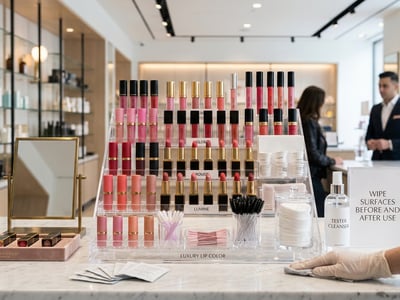
The next challenge is finding a manufacturing partner capable of supporting ongoing production requirements. Ordering a few displays for one location is very different from supplying fixtures to dozens of stores. Retailers need to consider manufacturing capacity, customization capabilities, production consistency, and communication efficiency. A dependable custom makeup display supplier can help businesses develop fixtures that meet specific product and store requirements. Establishing a long-term supplier relationship also makes it easier to coordinate future orders, replacement components, and merchandising updates.
Point-of-sale areas deserve particular attention because they are often among the most frequently visited sections of a retail store. Small cosmetics accessories, promotional products, and selected bestsellers can be presented near checkout counters to increase product visibility. A well-designed cash wrap display can make better use of this space without interfering with customer movement or checkout operations. Retailers should prioritize compact dimensions, easy product access, and convenient restocking when selecting these fixtures. A practical checkout display can support additional product discovery while keeping the payment area organized.
Supermarkets require a different merchandising approach because beauty products share space with numerous other retail categories. A carefully planned supermarket beauty display can help cosmetics and personal care brands establish a recognizable presence within a busy shopping environment. Retailers should consider aisle width, product accessibility, fixture height, and replenishment requirements before choosing a structure. Displays should also be designed to withstand frequent customer interaction. A consistent merchandising approach can help brands maintain a professional appearance across different supermarket locations.
Product category planning is another important part of multi-store retail management. Skincare products, for example, may require more shelf space than smaller cosmetic accessories because they often come in bottles, jars, and sets of different dimensions. A dedicated skincare display cabinet can provide structured storage while giving individual product lines sufficient visibility. Retailers can use consistent shelf arrangements and product grouping standards to ensure that customers encounter a familiar shopping experience regardless of which branch they visit.
Seasonal merchandising can create additional difficulties when several stores need to update their displays within the same period. Promotional campaigns may involve different products, changing graphics, and limited installation windows. A flexible sun care endcap can help retailers organize sunscreen and related products in a dedicated seasonal area. By planning these fixtures as part of the overall store merchandising system, businesses can simplify campaign execution and make seasonal product transitions easier to manage. Reusable structures can also reduce the need to develop completely new fixtures for every promotional period.
The final consideration is ensuring that all locations receive displays that meet the same quality and design expectations. Inconsistent dimensions, colour differences, damaged packaging, or missing components can create unnecessary difficulties during store installation. A dependable multi-store display rollout should include clear specifications, coordinated production schedules, and suitable delivery arrangements. Retailers should also establish procedures for checking incoming fixtures and reporting any problems before installation. Ultimately, successful multi-location merchandising requires a combination of standardized design, flexible manufacturing, and reliable project coordination. When these elements work together, beauty retailers can create a recognizable brand experience while managing the practical demands of store expansion.


Comments
Post a Comment